

What to Expect During an Accelerated TMS Week: A Practical Day-by-Day Guide

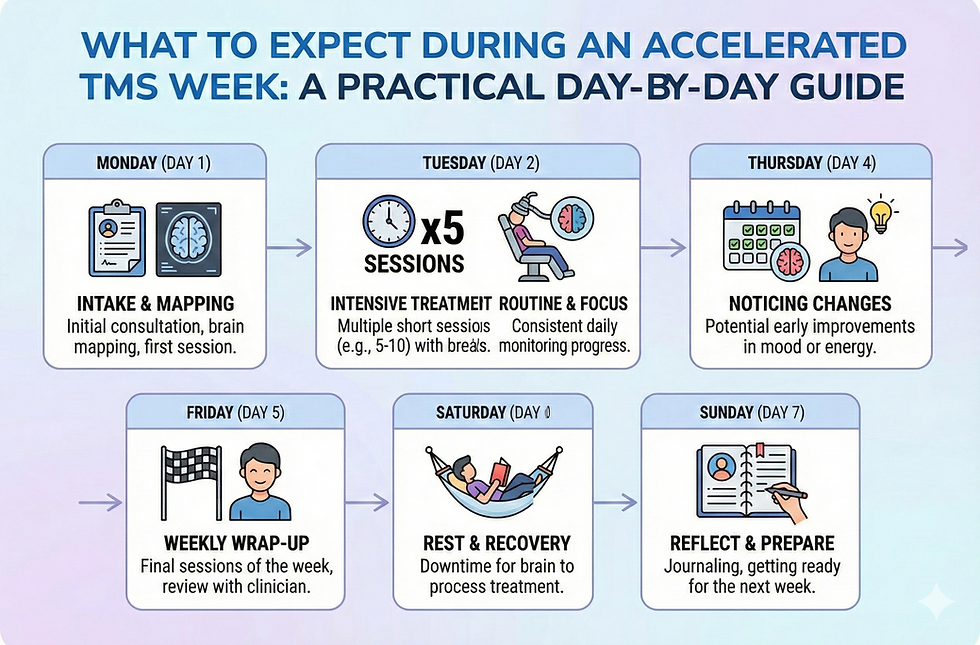
Committing to an accelerated TMS schedule is a significant investment of time and energy. Unlike standard treatment where you pop in for 20 minutes and head to work, an accelerated week often requires you to pause your normal routine to focus entirely on your brain health.
If you are considering this path near Atlanta, Powder Springs, or Stone Mountain, knowing exactly what the daily grind looks like can turn a stressful week into a manageable one.
What happens in an accelerated TMS session?
A single session typically includes a check-in, coil positioning, the stimulation itself, and a brief monitoring period. In an accelerated schedule, you simply repeat this loop multiple times a day.
The Setup: You sit in a comfortable treatment chair (similar to a dentist's chair or spa recliner).
The Pulse: The device delivers magnetic pulses to the target area. You hear a clicking sound and feel a tapping sensation on your scalp.
The Rest: In accelerated protocols, you have a mandatory rest period (often 50 minutes) between sessions to allow your brain neurons to reset before the next dose.
How long are you at the clinic each day?
Even if the active stimulation only takes a few minutes (using iTBS), the required breaks mean you will spend several hours per day in or near the clinic.
Standard Accelerated Day: Expect to be on-site or nearby for 4–6 hours daily, depending on the specific number of sessions (e.g., 5 to 10 sessions per day).
Sophroneo Tip: Our clinics in Austell (Powder Springs) and Stone Mountain are designed to be comfortable, but we recommend planning how you will spend your "gap time."
How should you prepare the week before accelerated TMS starts?
The best prep is logistical: lock in your sleep, clear your schedule, and plan for low-stress evenings. You want to enter Day 1 well-rested, not scrambling to finish work projects.
Week-Before Prep Checklist
[ ] Clear the Calendar: Do not schedule big meetings or social events in the evenings of your treatment week. You will be tired.
[ ] Hydrate: Good hydration can help reduce the risk of TMS-induced headaches. Start drinking more water 2–3 days before.
[ ] Plan Meals: Pre-cook or buy easy, healthy dinners. You won't want to cook after a 6-hour clinic day.
[ ] Coordinate Rides: If you are driving from further out in the Atlanta metro area, check traffic patterns. If you can, have a friend or family member drive you on Day 1 until you know how you feel.
What should you bring to make long clinic days easier?
Treat this like a long flight. You need comfort items to handle the waiting and the sensory input.
Hydration & Snacks: Water bottle and protein-rich snacks (check clinic policy on eating in waiting areas).
Layers: Clinics can be cool. Bring a hoodie or comfortable cardigan.
Entertainment: Noise-canceling headphones, audiobooks, or a tablet.
Ear Protection: The clinic provides earplugs (the machine clicks loudly), but you can bring your own comfortable foam ones if you prefer.
Comfort: Sunglasses (if you have a headache afterward) and comfortable slip-on shoes.
What side effects might show up during the week?
Headache and scalp discomfort are the most common physical side effects.
Scalp Discomfort: You may feel tenderness at the treatment site. This usually improves as your scalp gets used to the sensation.
Fatigue: This is very common in accelerated weeks. It’s a sign your brain is working.
Mild Headache: Often treated with over-the-counter pain relievers (ask your clinician first).
Important: If you feel sharp pain (not just tapping) or twitching in your face/eye during the pulses, tell the technician immediately. They can adjust the coil angle to fix this.
How do you track progress without overinterpreting?
It is easy to get obsessed with "Do I feel better yet?" on Day 2. Avoid that. Recovery is non-linear. Track basics, but look for trends over the week, not hourly shifts.
Simple Tracking Template
Sleep Quality: (1–10)
Energy Level: (1–10)
Anxiety Spikes: (Yes/No)
"Bright Spots": (Did you laugh? Did you enjoy a meal? Note small wins.)
What common schedule mistakes cause people to quit early?
Most people who struggle with accelerated TMS aren't struggling with the magnet; they are struggling with the logistics.
Mistake 1: Working during breaks. Don't try to take Zoom calls between sessions. Your brain needs the rest.
Mistake 2: Skimping on sleep. Your brain builds new pathways while you sleep. If you get 4 hours of sleep, you undermine the treatment.
Mistake 3: Driving in rush hour stress. If possible, schedule your day to miss the worst of the Atlanta traffic loops, or listen to calming podcasts during the drive.
What should caregivers know?
If you are supporting a loved one through this:
Be the Chauffeur: Driving them home allows them to rest and decompress.
Lower Demands: Do not ask them to make big decisions (like financial planning or vacation booking) during this week.
Watch, Don't Hover: Look for subtle changes—are they engaging more? Sleeping better? Share these observations with them gently.
What should you do if the week feels too intense?
Tell your care team immediately. Pushing through severe discomfort is not "toughness"; it's counterproductive.
Troubleshooting: Coping with the Week
Issue | Likely Cause | What to Try |
"I have a splitting headache." | Scalp muscle tension or dehydration. | Hydrate; ask technician to re-check coil angle; take approved OTC relief. |
"I'm exhausted by noon." | High stimulation load. | Nap during a break if allowed; go to bed at 8 PM. |
"I feel anxious during sessions." | Sensory overload or anticipation. | Practice "box breathing" during the pulses; ask for a break. |
"I missed a session." | Life/Traffic happens. | Call Sophroneo ASAP. We can often adjust the flow, but communication is key. |
How do next steps work after the accelerated week ends?
The end of the week is not the end of the journey. Neuroplasticity (your brain's ability to rewire) continues after the sessions stop.
The "Dip": Some patients feel a temporary dip in mood right after treatment stops before stabilizing. This is normal.
Follow-up: Schedule a check-in with your Sophroneo clinician for 1–2 weeks post-treatment.
Maintenance: Discuss whether therapy or medication management should be adjusted to support your new baseline.
Frequently Asked Questions:
Can I drive myself to sessions? Yes, TMS does not require sedation. However, for an accelerated week, having a driver on Day 1 is smart until you know how fatigued you will be.
Can I drink coffee? Usually yes, but ask your clinician. Excessive caffeine can alter your "motor threshold" (how much energy is needed to stimulate the neurons).
What if I get a cold during the week? fever or illness can affect treatment safety. Call the clinic immediately to reschedule.
Can I use my phone during the session? Generally, yes, as long as it doesn't interfere with the machine placement. Many patients listen to music.
Does Sophroneo offer weekend sessions? Our scheduling is primarily weekdays to ensure full clinical staff availability. Check with our intake team for current hours.
Is it boring? Yes, honestly. Bring entertainment. Boring is better than painful!


Comments